Can You Fly With a Swollen DJI Battery? No — and Here Is Why
Swelling means gas has built up inside a sealed cell — a one-way change that no charge, rest or reset reverses. Here is how to spot it, what to do with the pack, and whether it is covered.
No. A flight battery that has swollen should never be charged or flown again — not once, not “just to land”, not after it has cooled down. Swelling is a one-way physical change: gas has built up inside a sealed cell, and that gas is a symptom of chemical decomposition that nothing on your bench will undo. The question is not whether the pack is still usable, but how quickly you can get it out of the aircraft and to a recycling point.
If you have landed here with a battery already in your hand, skip straight to the disposal steps below. The rest of this page is the explanation you can read once the pack is somewhere safe.
What swelling actually means
A DJI intelligent flight battery is a sealed pouch cell — or a stack of them — wrapped in a rigid plastic shell. Under normal use the cell expands and contracts slightly as it charges and discharges, and the shell hides the movement. What you feel as swelling is the shell being pushed outwards by internal gas pressure the cell cannot reabsorb. That gas is produced when the electrolyte breaks down, a process that accelerates once a cell has been over-charged, over-discharged, cooked, or simply aged past the point where its internal resistance is still healthy. Unlike a low charge percentage, this is not a state you can recover from with a good long charge: the change has already happened inside the cell.
The five things that cause it
- Over-discharge. Flying a pack below the point where the aircraft forces a landing, or leaving one flat in a drawer for months, lets cell voltage fall into a range the chemistry does not tolerate.
- Heat. A pack left in a hot car, charged straight after a hard flight while still warm, or fast-charged repeatedly at its maximum rate ages the electrolyte faster than the cycle count alone would suggest.
- Charging while damaged. A drop, a crack in the shell or a bent contact can let a cell charge unevenly — and the damaged cell is the one that swells first.
- Storage at 100%. A full pack sitting on a shelf for a season is under chemical stress every day it waits. Long-term storage belongs at 50–60%.
- Age and cycle count. Past roughly 200 full cycles, internal resistance rises and the margin for all of the above shrinks. A pack can swell with no single obvious cause — it has simply run out of headroom.
How to tell a swollen pack from a normal one
- Lay it flat on a table. A healthy pack sits dead flat; a swollen one rocks gently on a high point in the middle.
- Slide it into the aircraft. If it needs force to seat, or the retention clip fights you, compare it side by side with a known-good pack of the same model.
- Sight down the long edge. Swelling shows first as a gentle curve along the seam where the two shell halves meet.
- Smell it. A sweet, solvent-like odour is a red flag even if the shell still looks flat — it means electrolyte vapour is escaping.
One situation that looks like swelling but is not: a pack flown or stored in deep cold can feel slightly different, and a very full pack at high temperature can look a little softer. That is thermal expansion, and it reverses as the pack returns to room temperature. Real swelling does not. If a pack still rocks on the bench after a night at 20 °C, treat it as swelling, not warmth.
The three stages, and what each one means
| What you see | What it means | What to do |
|---|---|---|
| A slight curve along the seam; it rocks gently on a flat surface | Early gassing — the cell has begun to break down | Stop flying it. Do not charge it. Move it to disposal. |
| A visible bulge; it will not seat without force | Advanced swelling; the shell is under real pressure | Do not fly or charge. Keep it away from anything flammable and recycle it. |
| Badly deformed, warm to the touch, or a sweet smell | The cell is venting, or close to it | Keep it away from people and flammables, do not puncture it, and take it to a recycler the same day. |
Is it going to catch fire?
Swelling on its own is not an open flame, and most swollen packs never ignite. But the same internal damage that produces the gas also makes the cell far less forgiving of the next insult: a puncture, a crush, a charger that keeps pushing current, or simply being dropped again. The failure mode you are trying to avoid is thermal runaway — where a damaged cell heats itself, ignites the electrolyte, and passes that heat to its neighbours. It is rare, and it is entirely avoidable. That is why every aviation authority and battery standard treats a swollen lithium pack as a pack you stop using, rather than one you keep an eye on: the cost of being wrong is an aircraft, or a house, and there is no upside worth that bet.
Safe disposal, step by step
- 1Do not puncture, crush or cut it, and do not try to “discharge it down” first. Both make the cell more dangerous, not less.
- 2Tape over the terminals with electrical tape so the contacts cannot short against anything metal.
- 3Put it in a cool, dry, well-ventilated place away from anything flammable — a metal tin or a ceramic dish on a concrete floor is better than a plastic bag on a shelf. Do not leave it in the sun or in a car.
- 4Take it to a lithium-battery recycling point. Most large electronics retailers, municipal household-waste sites and dedicated battery recyclers accept them, usually free of charge.
- 5Do not put it in household rubbish, and never ship it back by air — a swollen pack is not permitted as air cargo under the lithium-battery transport rules.
Will warranty cover it?
Sometimes, and it is worth asking before you write the pack off. The DJI consumer flight-battery warranty runs for 12 months and covers manufacturing defects within the first 200 charge cycles (about 100 on the FPV and Avata families); it does not cover normal capacity loss or damage caused by a crash or by water. If a pack swells inside that window with no crash history, it is a defect claim rather than a wear claim. Our own packs carry a 12-month warranty against manufacturing defects and against capacity falling below 80% — and a swollen pack that has not been physically damaged is a safety defect, so treat it as covered. Email support@poweryourfly.com with your order number and a photo of the pack, and we will start a replacement rather than a repair.
How to keep it from happening
- Store packs at 50–60% in a cool, dry place — our storage guide has the full routine.
- Let a pack cool for 15–20 minutes after a flight before charging it.
- Never leave a pack at 0% for more than a few days, and never let it sit at 100% for weeks.
- Charge with a hub or charger rated for the pack, rather than a generic fast charger pushed to its limit.
- Retire packs proactively when the app reports health below 80%, or when one pack warms noticeably more than its siblings on the same flight.
It is tempting to assume a swollen pack is a cheap-battery story. The chemistry disagrees: swelling is driven by how a pack is charged, stored and cooled, not by whose logo is on the shell. A well-made third-party pack with grade-A cells and a proper protection board ages on the same curve as an OEM pack, because it is the same chemistry being asked the same things. Where a cheap pack does raise risk is at the other end — an unbranded cell with no protection board can over-charge through a fault the board should have caught. That is the argument for buying from a supplier who publishes its cell grade and protection architecture, whatever the price.
Products mentioned in this guide
Third-party universal packs, priced at 60% of DJI official — 12-month warranty, free express shipping over $99 in most markets.
 Hot
Mavic 3 Universal Flight Battery
5000mAh · 46 min long endurance
 Universal
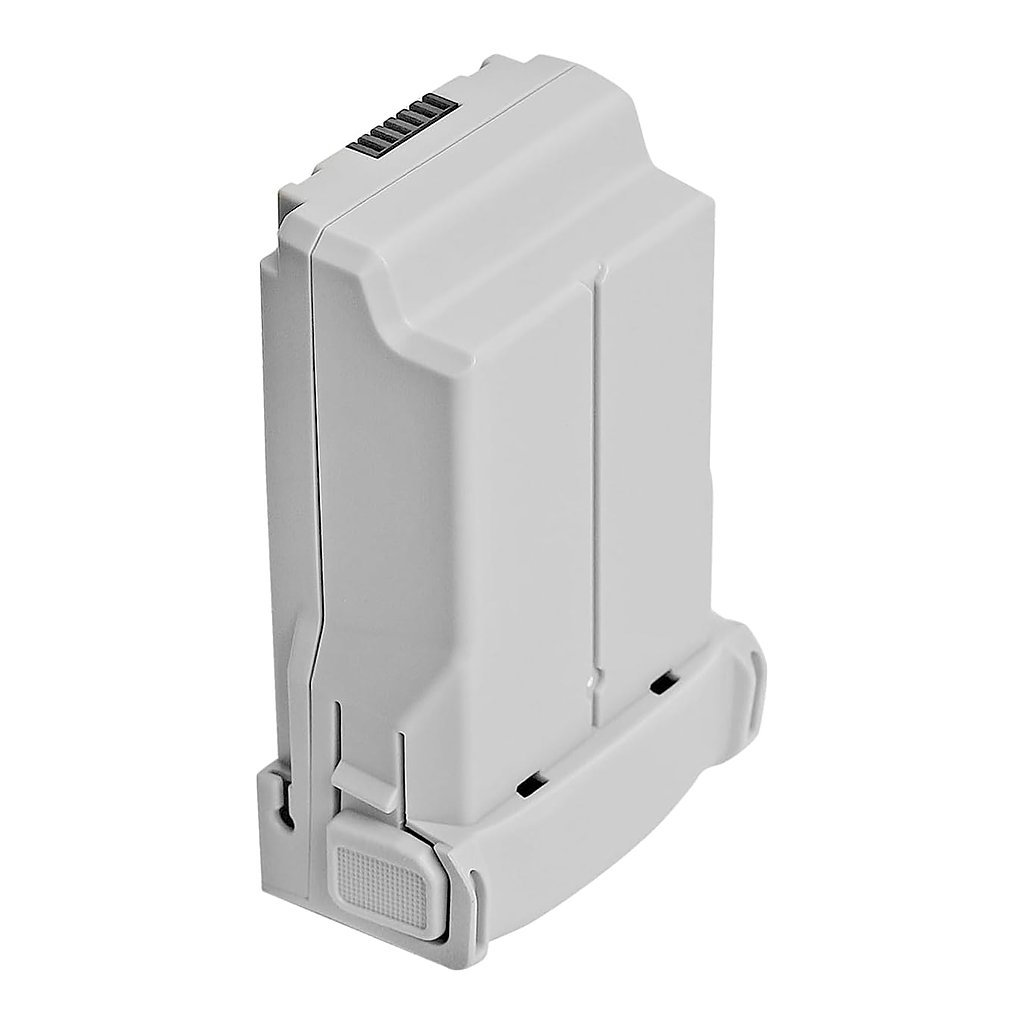
Mini 4 Pro Extended Battery
3850mAh · up to 45 min flight time
 Universal
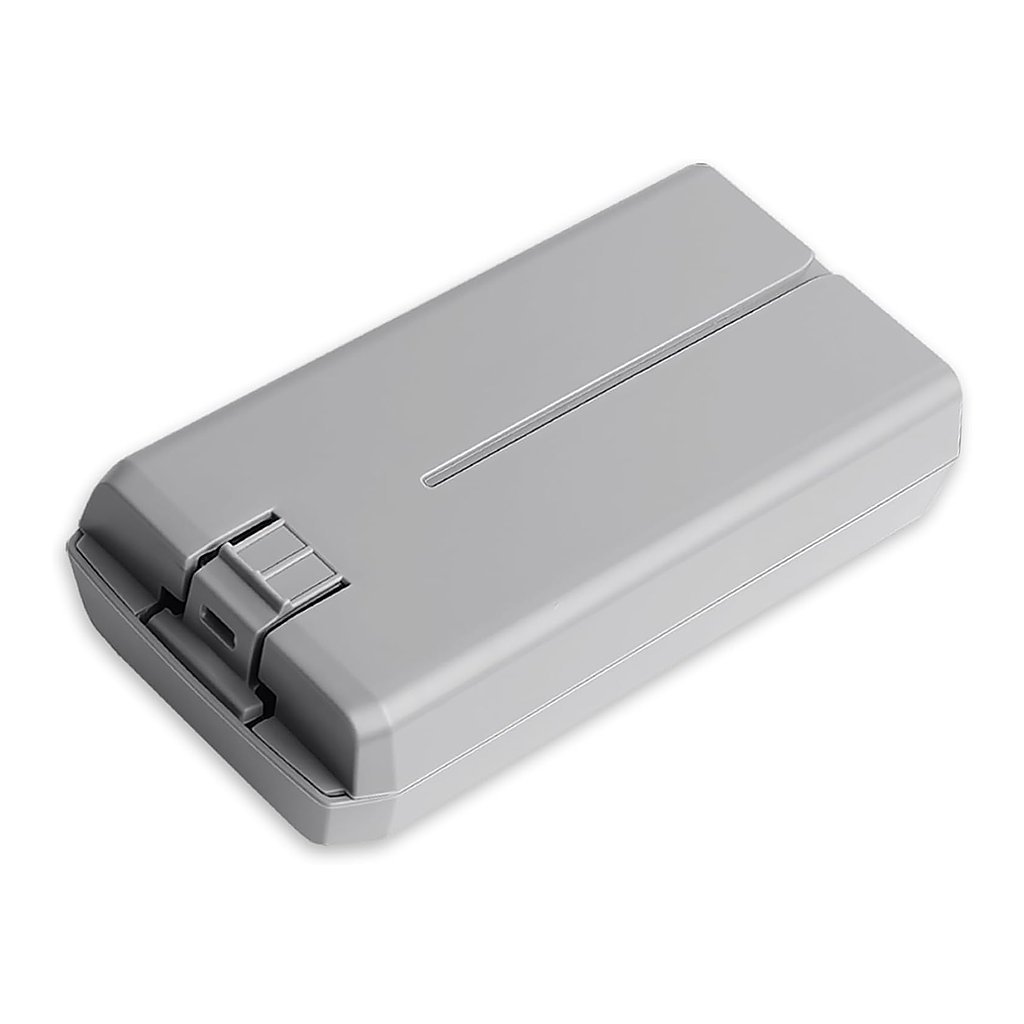
Mini 2 Universal Flight Battery
2400mAh · 31 min flight time
Frequently asked questions
Can I fly one more time with a swollen battery, just to land or drain it?
Does a swollen battery always mean it is about to catch fire?
Will you replace a swollen pack under warranty?
Get the next guide — and 15% off
One email when we publish something worth reading, plus a 15% code for your first order. Unsubscribe any time.