What Does a DJI Battery Warranty Actually Cover? (And What It Does Not)
A DJI flight battery is covered for 12 months and fewer than 200 charge cycles — whichever comes first. The two numbers decide almost every claim, so read them before you rely on them.
A DJI consumer flight battery is covered for 12 months and, for most airframes, fewer than 200 charge cycles — whichever comes first. Inside that window, manufacturing defects are covered. Outside it, or for normal capacity loss and crash damage, they are not. The two numbers matter more than the word “warranty”, because a pack flown hard can pass 200 cycles well inside a year, while a pack flown twice a month can still be inside its cycle count at three years old.
The official terms, in plain English
- Period: 12 months from purchase for consumer flight batteries.
- Cycle limit: fewer than 200 charge cycles — and lower, around 100, on the FPV, Avata and Neo families.
- What is covered: manufacturing defects, and failures that are not caused by the user.
- What is not covered: normal capacity loss, crash or water damage, unauthorised disassembly, and use outside DJI’s stated conditions.
- What you may need: the purchase invoice, and the cycle count the DJI Fly app reports for the pack.
The cycle limit, and why it is 200
The number is not arbitrary. A charge cycle is one full 0-to-100% discharge, and two 50% flights count as half a cycle — which is why your count climbs slower than your flight log suggests. Across lithium cells, capacity fading to about 80% of its original value after a few hundred cycles is simply how the chemistry behaves; manufacturers set the warranty line where “defective” ends and “aged” begins. DJI draws that line at 200 cycles for most flight batteries, and tighter on the high-draw FPV and Avata packs, which are worked harder per flight.
Does the 12 months start at purchase, or at first charge?
It starts at purchase — specifically, from the date on the invoice. That detail is the single most common reason a legitimate claim fails: a pack bought as a spare and first charged eight months later has already spent two-thirds of its warranty sitting in a drawer. If you buy a pack in advance, note the date you bought it, not the date you first flew it, and keep the invoice where you can find it.
DJI vs PowerYourFly, side by side
| Condition | DJI official battery | PowerYourFly pack |
|---|---|---|
| Warranty period | 12 months | 12 months |
| Cycle-count limit | Under 200 cycles (about 100 on FPV / Avata / Neo) | No cycle cap |
| Manufacturing defects | Covered | Covered |
| Capacity below 80% | Not covered — treated as normal ageing | Covered within 12 months |
| Crash or water damage | Not covered | Not covered |
| A third-party pack in the aircraft | May void aircraft service | We are the third party — your aircraft warranty is your own to keep |
| Claim route | DJI service centre, with proof of purchase | Email support, photo of the pack, replacement shipped |
What “not covered” usually means in practice
The clause that surprises owners is normal capacity loss. A battery that has fallen from 100% to 82% in nine months is not faulty by DJI’s definition — it is doing what the chemistry is expected to do, and 80% at 200 cycles is the line, not a promise that it stays near 100% the whole time. The second surprise is damage that looks like a defect and is not: a pack that has been dropped, flown in rain, or left in a hot car. The third is a modified pack — once it has been opened, no manufacturer will stand behind it, and rightly so.
Does DJI Care Refresh cover batteries?
DJI Care Refresh covers the aircraft and, on some plans, the battery that came with it as part of the airframe. It is a damage-and-replacement programme rather than a defect warranty, and a battery that fails a capacity or cycle test without crash damage is still a warranty question, not a Care question. Two things follow: read the plan for your specific aircraft rather than assuming batteries are included, and if you are buying third-party packs to save money, keep one genuine pack aside for any Care or warranty service — it is the cleanest way to avoid an argument at the service centre.
How to make a claim without losing a week
- 1Find the invoice. Without proof of purchase and a date, the 12 months has no start point.
- 2Note the cycle count and health from the DJI Fly app: battery info → cycle count / health.
- 3Photograph the pack, the label with the serial number, and any swelling or damage.
- 4Open the claim with the seller or DJI service in your region, and keep the case number.
- 5Do not open the pack or attempt a repair — that ends the claim on the spot.
The three things that most often sink a claim
- No invoice. The 12 months runs from the purchase date, so a pack bought as a spare and first used months later can be near the end of cover when it finally fails.
- Cycle count over the cap. A pack flown daily can pass 200 cycles inside a year; once it has, a defect claim becomes a judgement call.
- An opened pack. Any attempt to repair, re-cell or “reset” a battery ends the warranty immediately — and rightly so.
None of these are gotchas. They are simply the facts a claim is tested against, and all three are decided at the moment of purchase rather than the moment of failure — which is why a note in your phone beats a hunt through old emails.
How long a well-cared-for pack really lasts
Two numbers describe a battery’s life, and they are easy to confuse: the warranty period and the cycle rating. A DJI consumer pack is warrantied for 12 months and under 200 cycles, but DJI rates its cells for roughly 80% capacity at the 200-cycle mark — which means a pack can be perfectly healthy and still outside its warranty. Our packs are rated 800+ cycles to 80%, so the gap between “out of warranty” and “worn out” is wider: a pack that retires at 800 cycles has delivered about four times the flight time of one that dies at 200. Storage at 50–60%, cooling before charging and avoiding deep discharge are what move a pack toward the top of its rating rather than the bottom.
Buying a spare without wasting its warranty
The most common avoidable mistake is buying a spare and storing it at full charge for months. It has spent warranty time, gained a little calendar ageing, and delivered none of the flights it was bought for. If you keep a spare, note the purchase date, store it at 50–60%, and rotate it into use so both packs share the flying instead of one ageing quietly on the shelf.
Why our warranty has no cycle cap
We can afford to drop the cycle limit because the packs we sell are rated 800+ cycles to 80% capacity, and because a replacement pack costs us less than a reputation does. The maths is simple: a battery that fails early and is not replaced turns one lost sale into a permanent one. If a pack loses more than 20% of its capacity inside its first 12 months — roughly the point where the aircraft itself starts reporting reduced flight time — we replace it. The full terms are on our warranty page, and the price difference against DJI is itemised in the OEM vs third-party comparison.
What is still your responsibility
A warranty covers what the factory got wrong; it does not cover what gravity and heat do. Three habits keep a pack inside its cover: store it at 50–60% rather than full, never fly it to zero and leave it there, and let it cool before charging. The routines that actually extend life are in our battery-life guide, and the storage detail is in the storage guide.
Products mentioned in this guide
Third-party universal packs, priced at 60% of DJI official — 12-month warranty, free express shipping over $99 in most markets.
 Hot
Mavic 3 Universal Flight Battery
5000mAh · 46 min long endurance
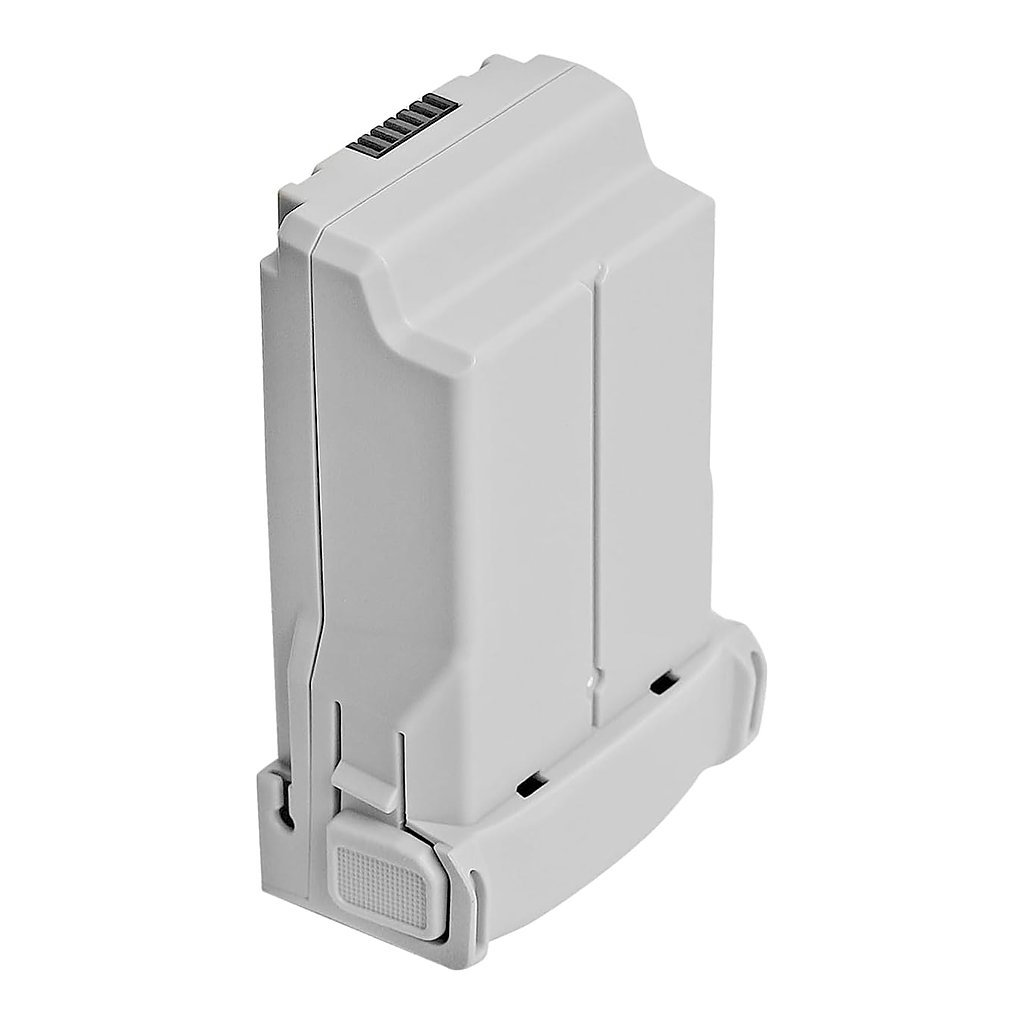 Universal
Mini 4 Pro Extended Battery
3850mAh · up to 45 min flight time

Phantom 4 Pro Universal Battery
5870mAh · 30 min flight time
Frequently asked questions
How long is a DJI flight battery under warranty?
Does the DJI warranty cover a battery that simply lost capacity?
What warranty do your packs come with?
Get the next guide — and 15% off
One email when we publish something worth reading, plus a 15% code for your first order. Unsubscribe any time.