Drone Battery Shipping: The UN38.3 Checklist to Work Through Before You Post
Air couriers reject lithium parcels for missing paperwork far more often than for the battery itself. Here is the full list, in the order a carrier checks it.
A lithium drone battery that travels by air needs four documents, one charge limit and two labels. Get any of them wrong and the parcel is stopped at the ramp, usually after you have already paid for the label. The 2026 edition of the IATA Dangerous Goods Regulations (67th edition) kept the rule that matters most — lithium-ion cells and batteries shipped on their own must travel at a state of charge of 30% or less — and carriers are now checking paperwork more strictly than ever. Below is the sequence a courier actually works through.
The checklist, at a glance
| Item | What it is | Who provides it |
|---|---|---|
| UN38.3 test report | Proof the cell passed altitude, thermal, vibration, shock, short-circuit, crush, overcharge and forced-discharge tests | The cell manufacturer, via a CNAS/CMA-accredited lab |
| MSDS / SDS | GHS safety data sheet listing chemistry, Wh rating, hazards and emergency measures — usually bilingual | The battery manufacturer |
| Air transport condition appraisal | Document naming the UN number, hazard class and permitted aircraft | An aviation-recognised testing body |
| Dangerous goods declaration (DGD) | The shipper’s formal declaration for the consignment | You or your freight agent |
| SoC 30% or less | State of charge at the moment of handover | You — verified by test record |
| Lithium battery mark + UN number | Label on the outer box; Class 9 label and “cargo aircraft only” where the section requires it | You, at packing |
Step 1 — the 30% state-of-charge rule
For UN3480 — lithium-ion batteries shipped by themselves, which is what a spare drone pack is — the SoC at handover must be 30% or less of rated capacity. This is not an airline preference; it is in the regulations, because a high-charge cell in a low-pressure cargo hold is the scenario the rule exists to prevent. Anything above 30% needs approval from both the state of origin and the state of the operator.
SoC is not the same as the percentage on the app you last saw. It is measured against rated capacity on a test record. If you are shipping a single pack as a one-off, the practical answer is to discharge it to around 25–30% on the app, then say so on the declaration — and to know that a pack reading 30% is at the ceiling, not comfortably under it.
Step 2 — the documents that stop the parcel
- UN38.3 test report for the exact cell and format, from an accredited laboratory. A report for a different capacity is not transferable.
- MSDS/SDS in the language your courier asks for — most international lanes want bilingual.
- Air transport condition appraisal naming the UN number and whether passenger aircraft are permitted.
- A dangerous goods declaration matching what is actually in the box — declare three packs, ship three.
- For larger consignments, a packaging certificate showing the box passed the required drop and stack tests.
A note on the 1.2 m drop and 3 m stack tests: they apply to the package, not the battery, and the 2026 rules added stack testing to more scenarios. If you are shipping more than a couple of packs, use packaging from a supplier who already holds the certificates rather than assembling your own box.
Step 3 — packaging and labels
- 1Insulate every terminal — tape over the contacts or place each pack in its own insulated sleeve. A bare terminal touching anything conductive is the single most common cause of lithium incidents.
- 2Keep packs from shifting. Foam or moulded inserts, no metal fragments, nothing that can crush a cell.
- 3Apply the lithium battery mark to the outer box, with the UN number and the watt-hour rating.
- 4Add a Class 9 lithium battery label where the packing instruction requires it, and “Cargo Aircraft Only” for UN3480 consignments that cannot fly as cargo on a passenger aircraft.
- 5Never include a swollen, leaking or recalled pack. No paperwork makes a damaged cell shippable.
Step 4 — the UN number decides everything else
| What is in the box | UN number | Packing instruction | Passenger aircraft |
|---|---|---|---|
| Spare battery, on its own | UN3480 | PI 965 (Section IA / IB / II by Wh and quantity) | Forbidden in most cases — cargo aircraft only |
| Battery packed alongside equipment | UN3481 | PI 966 | Limited, subject to Wh and section |
| Battery contained in equipment | UN3481 | PI 967 | Generally permitted, subject to Wh |
| Lithium-metal cell or battery | UN3090 / UN3091 | PI 968–970 | Tightly restricted |
Drone packs sit in the first row: a spare flight battery is UN3480, and that is why air-freighting them is more paperwork than mailing a phone. Our own shipping and duty page sets out how we move full orders under these rules, and the lithium shipping guide covers what the process looks like from a buyer’s side.
Step 5 — carrying packs yourself instead
The rules for your own luggage are looser than for cargo, and IATA publishes them plainly: lithium batteries and devices go in cabin baggage, never in the hold, and spare packs must be protected against short circuit. The capacity bands below are what the airlines apply.
| Rated energy | Carry-on | Checked baggage | Notes |
|---|---|---|---|
| Up to 100 Wh | Allowed | Devices yes, spares no | Our largest pack is 99.5 Wh — inside this band |
| 100–160 Wh | Allowed with airline approval | Devices only, with approval | Typically a limit of two spares per passenger |
| Over 160 Wh | Not permitted | Not permitted | Passenger aircraft refuse them outright |
Two habits avoid almost all airport friction: keep spare packs in their original packaging or with taped terminals, and carry them on the aircraft with you rather than in a bag you might be asked to gate-check. If your cabin bag is taken at the gate, take the batteries out first — this is exactly the moment people lose packs.
Why shipments actually get rejected
- State of charge above 30% with no approval recorded.
- No MSDS, or an MSDS for a different chemistry or capacity.
- Batteries declared as ordinary goods, then found on the X-ray.
- Terminals not insulated, or packs loose in a single-wall box.
- More packs in one carton than the section allows without a Class 9 label.
- A swollen, refurbished or salvaged pack in the consignment.
Sending a single pack: what actually happens
One-off shipments are where people get caught out, because ordinary postal and express-parcel channels are closed to standalone lithium packs. What works is a freight agent or a courier’s dangerous-goods desk that handles UN3480 as a small DG consignment: you supply the paperwork, they apply the correct packaging and labelling, and the rate carries a DG surcharge on top of the freight. Expect the process to be slower than a normal parcel, and expect the documents to be checked before collection rather than after.
If a shipment is stopped anyway, the useful response is to find out which line the carrier failed it on — charge state, paperwork, terminal insulation, packaging type — rather than to re-send it unchanged. Most rejections come down to one fixable item, and re-tendering the same box is how a small problem turns into a carrier that will not take your bookings at all.
Products mentioned in this guide
Third-party universal packs, priced at 60% of DJI official — 12-month warranty, free express shipping over $99 in most markets.
 Hot
Mavic 3 Universal Flight Battery
5000mAh · 46 min long endurance
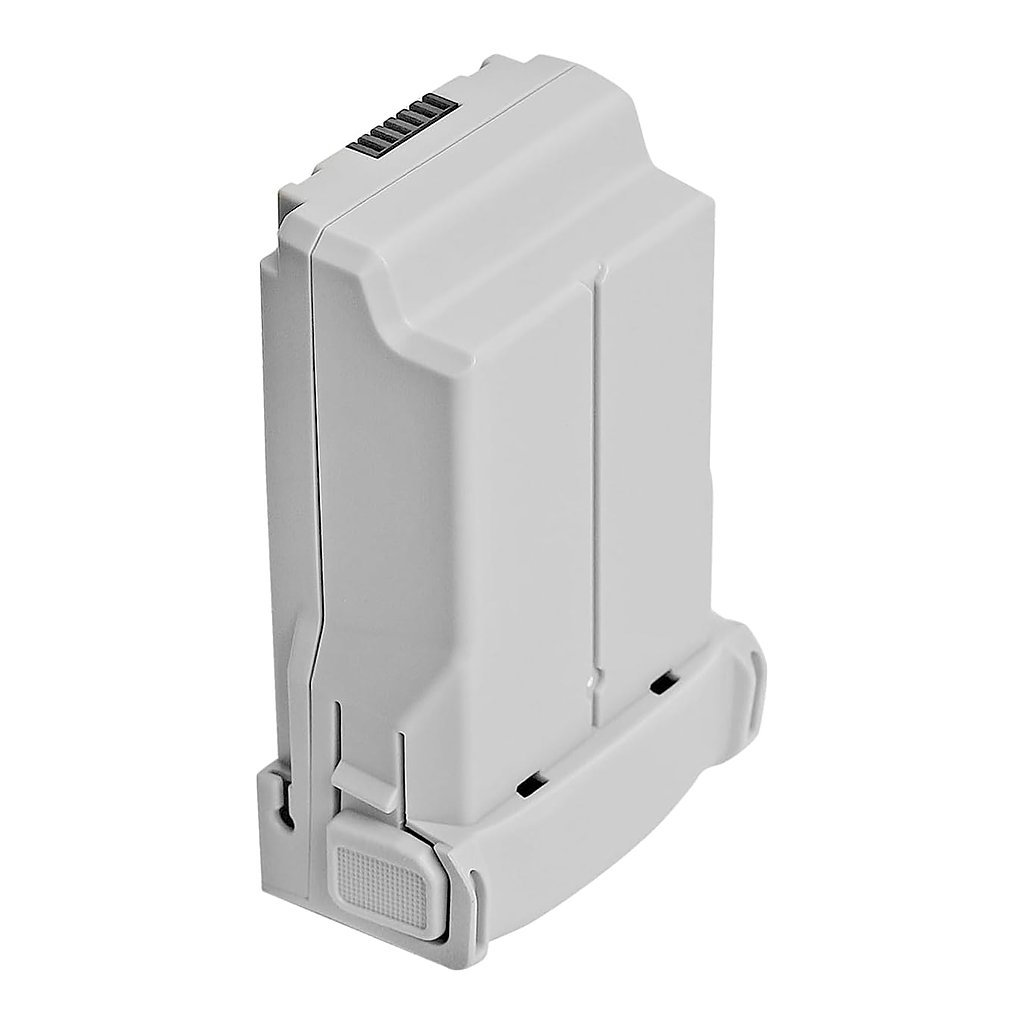 Universal
Mini 4 Pro Extended Battery
3850mAh · up to 45 min flight time
 Hot
100W Multi-Port Battery Hub
Charge 3 batteries simultaneously
Frequently asked questions
What state of charge should a drone battery be shipped at?
Which documents must accompany a lithium battery shipment?
Can I carry drone batteries on a plane myself?
Get the next guide — and 15% off
One email when we publish something worth reading, plus a 15% code for your first order. Unsubscribe any time.