How to Spot a Counterfeit DJI Battery — and What to Buy Instead
A counterfeit is not a cheap third-party battery. It is a pack wearing someone else’s brand, with nobody accountable when it swells — here is how to tell the two apart before you pay.
There are three kinds of DJI-compatible battery: the original DJI pack, an honest third-party pack that carries the seller’s own brand and its own paperwork, and a counterfeit that wears DJI’s name, logo and packaging without DJI having made it. The third category is the one to avoid — not because it is cheap, but because it is untraceable. No manufacturer, no test report, no warranty, and no one to answer for a cell that fails. Below is how to tell them apart at the listing, in the box, and in the app.
The three kinds of pack, honestly compared
| DJI original | Third-party (like ours) | Counterfeit | |
|---|---|---|---|
| Branding | DJI | The seller’s own brand | DJI’s name and logo, printed by someone else |
| Cell grade | Not published | Published on the spec sheet | Unstated, often ungraded |
| UN38.3 report | Held by DJI | Held and available on request | Normally none exists |
| Protection board | Yes | Yes — multi-layer over-charge, over-discharge, over-current, short circuit | Sometimes a bare board, sometimes none |
| Warranty | 12 months / 200 cycles | 12 months, published terms | None you can enforce |
| Price | 100% | About 60% | Whatever it takes to look tempting |
The distinction matters because the counterfeit market borrows the reputation of the discount third-party market. We sell the middle column, and we say plainly that our packs are not DJI products and we are not affiliated with DJI. That sentence is the cheapest counterfeit test there is: a seller who will not say it is usually hiding something.
Red flags in the listing
- The words "genuine", "original OEM" or "DJI original" at a price far below DJI’s own store.
- One stock photo of a DJI box used across every model, instead of photos of the actual pack with its label.
- No cell grade, no cycle rating, no capacity in Wh — only a mAh figure and marketing copy.
- A seller with no returns address and no way to contact anyone after the sale.
- Serial numbers that repeat across listings, or a label you can only ever see at an angle.
- A price lower than a legitimate third-party pack that publishes its paperwork — the honest ones have a floor. Our own OEM vs third-party comparison shows where that floor sits.
Red flags in the box
If you buy a pack with DJI branding, the box is where counterfeits are easiest to catch. Genuine DJI packaging is printed cleanly with consistent colour registration, a legible serial number and a hologram or security feature that changes appearance with the angle. Counterfeits show fuzzy print, a slightly off brand colour, a serial sticker applied by hand, and no documentation beyond a folded slip.
Weigh the pack, too. A pack built with lower-grade cells is often a few grams light, and the weight is published for the genuine article. For a battery advertised as DJI-branded, ask yourself one question: why would a genuine DJI pack be sold at a third of DJI’s price by a seller with no DJI account?
Red flags only the app can show
Fit a questionable pack and the aircraft itself will tell you things the listing could not. Genuine and properly made packs report their full telemetry; counterfeits and badly made packs frequently cannot.
| What you see in the app | Good sign | Warning sign |
|---|---|---|
| Cell voltages | Individual cells reported, close together | No per-cell data, or a wide spread |
| Cycle count | Reads consistently with your flying | Stuck at zero, or resets between flights |
| Percentage | Tracks the flight smoothly | Jumps, drifts, or disagrees with flight time |
| Low-battery behaviour | Auto-return triggers as configured | Warning arrives late or the pack cuts early |
| Temperature | Moves with load | Flatlined or implausible readings |
The three-minute battery check walks through reading all of these properly. A new pack that fails any of the right-hand column is a return, whatever the seller claims about it.
Why counterfeits are a safety problem, not just a bad deal
- No UN38.3 report — so a courier that opens the box can seize the shipment, and you have no recourse.
- Unstated or ungraded cells — capacity can be overstated, which means flight-time estimates you cannot trust.
- Weak or missing protection board — over-discharge protection is the last line before a cell is damaged.
- No warranty route — the failure you are most likely to need covered is the one nobody will cover.
A swollen or failing pack is a fire risk wherever it sits, and that risk does not care whether the branding looked convincing. If a pack with DJI branding shows a wide cell spread, a fast self-discharge or any swelling, treat it as unsafe and take it to a lithium recycling point rather than flying it until it is empty.
Where the risk concentrates
Counterfeits cluster where the buyer cannot easily verify anything: third-party marketplace listings with no seller history, classifieds and social posts, and auction listings with one blurry photo. Reputable routes — DJI’s own store for original packs, or a third-party seller who publishes its cell grade, cycle rating and UN38.3 paperwork — both survive verification. Check whether the seller has a returns address and a support inbox before price becomes the deciding factor.
If you have already been sold a fake
- 1Stop flying it, and do not charge it again — a suspect pack can fail quietly.
- 2Photograph the label, the box and the listing page while they are still available.
- 3Open a case with the marketplace or payment provider, citing "not as described" rather than quality.
- 4Check whether the listing is still up, and report it — many platforms act on patterned complaints.
- 5Dispose of it at a lithium battery recycling point, terminals taped, and tell the recycling staff what it is.
What an honest third-party pack looks like
- The seller says outright that the pack is not a DJI product and that it is not affiliated with DJI.
- The spec sheet states capacity, voltage, energy in Wh, weight and a cycle rating.
- UN38.3 and MSDS documents exist and can be sent on request.
- There is a published warranty with a named period, and a return route for firmware incompatibility.
- The price sits around 60% of DJI’s list — high enough to be built to spec, low enough to show what branding and distribution cost.
That last point is the whole argument for the middle column: you are buying the same cell chemistry without the brand layer, and you can check every claim before you pay. Our picks by airframe show what the honest end of that market actually costs.
The warranty question nobody mentions
DJI’s published position is that it may decline to service an aircraft flown with a non-DJI battery. That is not a reason to avoid third-party packs, but it is a reason to be deliberate about it: pilots who rely on DJI Care Refresh often keep one genuine pack for warranty work and use third-party packs for everyday flying, so a service claim never turns into an argument about the battery. Budgeting one original pack alongside a set of third-party packs costs less than buying everything genuine, and it keeps both routes open.
The same logic cuts the other way, and it is the honest argument for the middle column. Because we publish a 12-month warranty, hold a UN38.3 report for every format, and offer a return route when firmware refuses a pack, an honest third-party battery gives you something a counterfeit never can: somebody accountable to contact. The comparison page sets both columns side by side on price, cells, certification and who services what.
Products mentioned in this guide
Third-party universal packs, priced at 60% of DJI official — 12-month warranty, free express shipping over $99 in most markets.
 Hot
Mavic 3 Universal Flight Battery
5000mAh · 46 min long endurance
 New
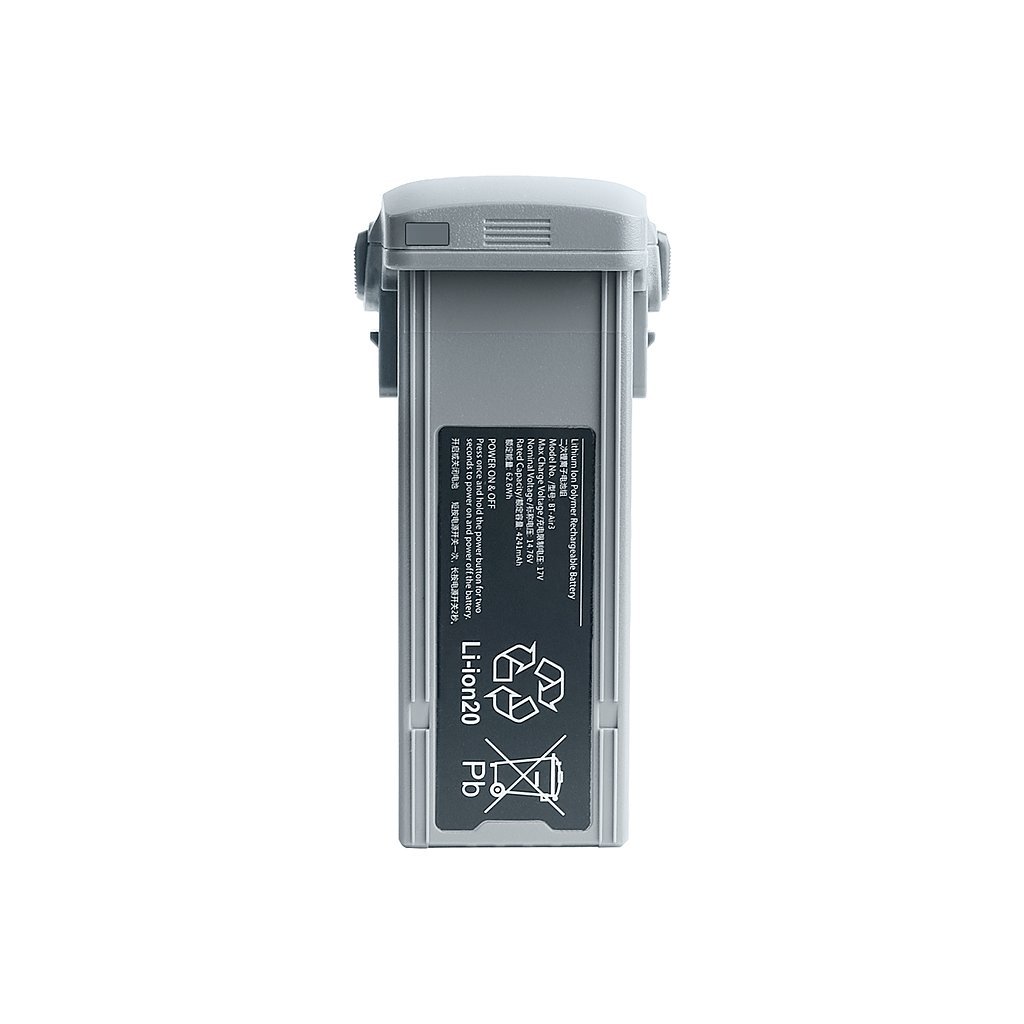
Air 3 Long-Range Battery
4241mAh · 46 min flight time

Phantom 4 Pro Universal Battery
5870mAh · 30 min flight time
Frequently asked questions
How do I tell a counterfeit DJI battery from a third-party one?
What are the warning signs of a fake DJI battery?
Why is a counterfeit battery more dangerous than a cheap third-party pack?
Get the next guide — and 15% off
One email when we publish something worth reading, plus a 15% code for your first order. Unsubscribe any time.